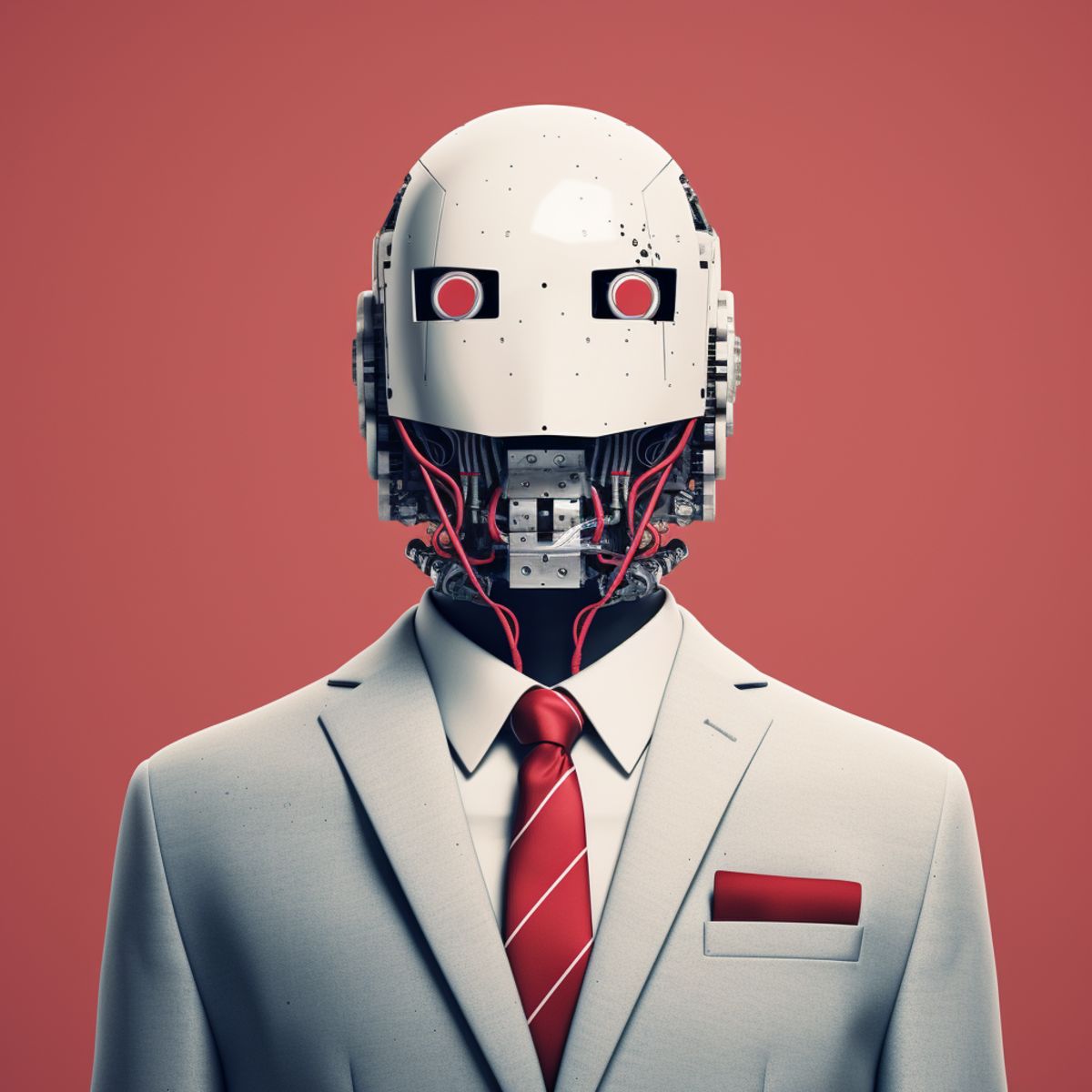
Mark Zuckerberg is personally spending 5 to 10 hours a week training an AI clone of himself. The clone is photorealistic, voice-matched, and being deployed to interact with Meta employees in his stead. This is either the most efficient use of executive time in corporate history, or the opening scene of a Black Mirror episode nobody greenlit.
The Take
Meta is building a photorealistic 3D AI avatar of its CEO, trained on his mannerisms, his voice, his public statements, and his strategic worldview. The goal: to let AI-Zuckerberg interact with employees on internal platforms so that Real-Zuckerberg can go back to vibe coding and Brazilian jiu-jitsu.
Zuckerberg is personally overseeing the effort. He is, in essence, building a better version of himself and then handing it control over his employees. The audacity of this is genuinely impressive. So is the horror.
This is the hot take: AI executive avatars are not a dystopian edge case. They are the logical endpoint of every "scale your leadership" LinkedIn post ever written. And we are about to find out whether that is a feature or a bug.
The Case For It
A CEO who scales is genuinely useful. Zuckerberg runs a company with 70,000 employees. He cannot have a one-on-one with all of them. He cannot attend every all-hands. He cannot respond to every internal message. An AI trained on his actual thinking and communication style could, theoretically, close that gap.
If the AI-Zuckerberg gives you real feedback on a project, in his actual voice, reflecting his actual strategic priorities, is that worse than getting a canned response from a middle manager who skimmed your deck? Make the case. We dare you.
There is also a pure-efficiency argument. Every hour a CEO spends on internal communications is an hour not spent on product strategy, investor relations, or regulatory fights. If an AI can handle the former, maybe the company actually runs better.
The technology works, too. Meta has been building photorealistic avatar tech for years. This is them eating their own cooking.
The Case Against It
Where to start.
Employees are not just processing units who need information delivered efficiently. They are people who want to feel seen by their leadership. An AI clone does not see you. It pattern-matches you. Those are very different things, and most people can tell the difference even when they cannot articulate why something feels off.
There is also the accountability problem. When AI-Zuckerberg makes a decision or gives direction, who owns that? Is it binding? Can you argue with it? Can you appeal it? What happens when it contradicts what Real-Zuckerberg said six months ago? The AI is trained on public statements, but Zuckerberg's private views are what actually run the company.
And then there is the surveillance angle. An AI trained on your CEO's worldview, deployed on internal platforms, interacting with employees. What is it logging? What is it learning? The same technology that lets AI-Zuckerberg give you feedback can, in theory, give Real-Zuckerberg a read on every employee it interacts with. "Engagement metrics" just got a lot more intimate.
Finally: this does not stay at Meta. The moment this works, every Fortune 500 CEO has an AI clone within 18 months. Your boss's boss's boss just became a software product. What does that do to organizational trust at scale?
Our Actual Read
The tech will work fine. The human layer is where this gets weird fast.
What Zuckerberg is really testing is whether employees will accept a surrogate relationship with leadership as a legitimate substitute for the real thing. Smart companies have been automating human interaction for years. This is just the first time it has a face.
The honest answer is that some employees will not care, some will hate it, and the ones who hate it will be the ones who already thought something was off. None of that breaks the company. But it does tell you something about where work is headed: your relationship with "management" increasingly means your relationship with a system that models management.
We are not saying that is good or bad. We are saying it is happening. Zuckerberg is just the first person to admit it out loud while spending his own time making it true.
That either makes him visionary or deeply strange. Possibly both. Definitely both.
Hot takes delivered daily. Subscribe here before the AI version of your boss learns your name.